

.svg)


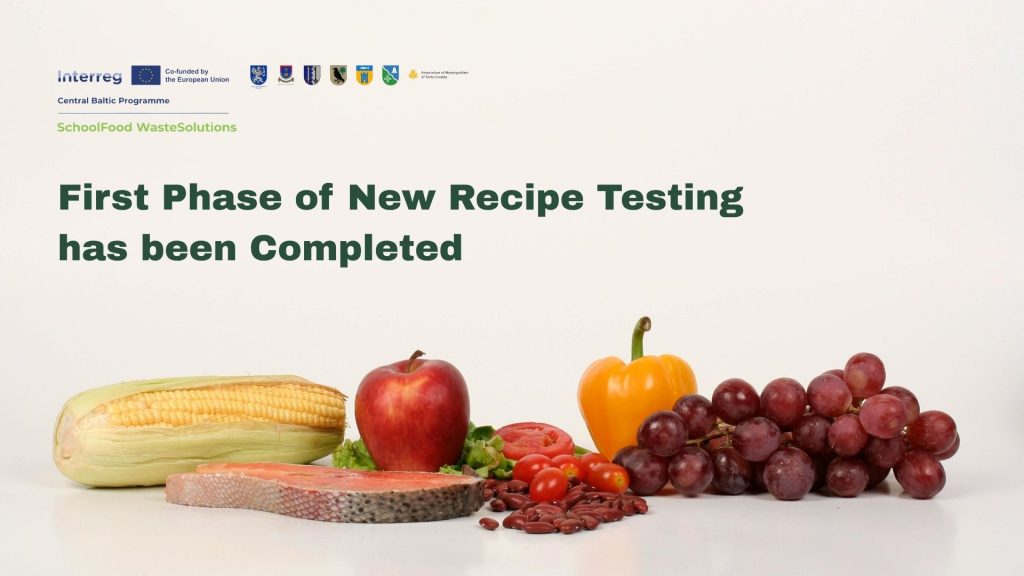
More than 20 new recipes, hundreds of student evaluations, and one shared goal – to create healthy, sustainable school meals that align with students’ tastes while reducing food waste. The first eight-month recipe testing phase has been completed in the Latvian and Estonian pilot schools participating in the “SchoolFood WasteSolutions” project. The results will serve as the foundation for the development of a school recipe book and the introduction of a buffet-style dining approach.
Systematic testing of new recipes was carried out to identify students’ taste preferences, assess the acceptability of new products and dishes, and gather data-driven insights for the development of a school recipe book. The project aims to create menus that meet students’ tastes and nutritional needs, are suitable for buffet-style dining, and help reduce food waste in schools.
Over an eight‑month period, more than 20 different recipes were tested together with students in the project’s pilot schools – Mērdzene Primary School, Ludza City Secondary School, Riebiņi Primary School, and Preiļi Primary School No. 1 in Latvia, as well as Sillaotsa School and Pala School in Estonia. During tasting sessions, students explored new flavours, diverse ingredient combinations, and opportunities for healthy, balanced nutrition in everyday school meals.
Student feedback and voting results provide an important contribution to improving school meal offerings. They help identify which dishes are well accepted, where improvements are needed, and how to create meals that are both nutritious and appealing to students.
As noted by Dzintra Kokta, project expert at Daugavpils University:
“Through the ‘SchoolFood WasteSolutions’ project, we are already seeing several significant benefits. The project’s main objective is to reduce food waste in school catering, and testing new recipes is an important step towards achieving this goal. It helps students become familiar with ingredients that have so far been used less frequently in school menus, such as lentils, chickpeas, and coconut milk. This process is also a valuable learning experience for school cooks, who are developing new skills in ingredient use and food preparation techniques. As the project progresses, pilot schools will gradually introduce a buffet-style dining approach, further increasing student involvement and helping to reduce food waste.”
In the next phase of the project, activities will focus on testing additional recipes and developing the buffet-style dining approach in pilot schools. Schools will be equipped with the necessary buffet-serving equipment, and kitchen facilities will be upgraded to expand opportunities for providing healthy, diverse, and sustainable meals.
The Daugavpils University ‘SchoolFood WasteSolutions’ project team sincerely thanks all pilot schools, their management, cooks and cafeteria staff, teachers, students, and project partners for their active involvement, responsiveness, and contribution to the implementation of recipe testing activities.
| This project is co-financed by the European Union. The Interreg Central Baltic Programme 2021–2027 promotes cross-border cooperation to address shared challenges and build a more sustainable, innovative, and inclusive Central Baltic region. |
Programme website: https://centralbaltic.eu/
Official EU website: www.europa.eu
| Contact person | Rita Ivanova |
| Organisation | Daugavpils Universitāte |
| Position | Vecākā projektu vadītāja |
| rita.ivanova@du.lv | |
| Phone | 29857838 |
This publication has been prepared with the financial support of the European Union. Daugavpils University is solely responsible for the content of this publication, which should not be regarded as reflecting the views of the European Union.


