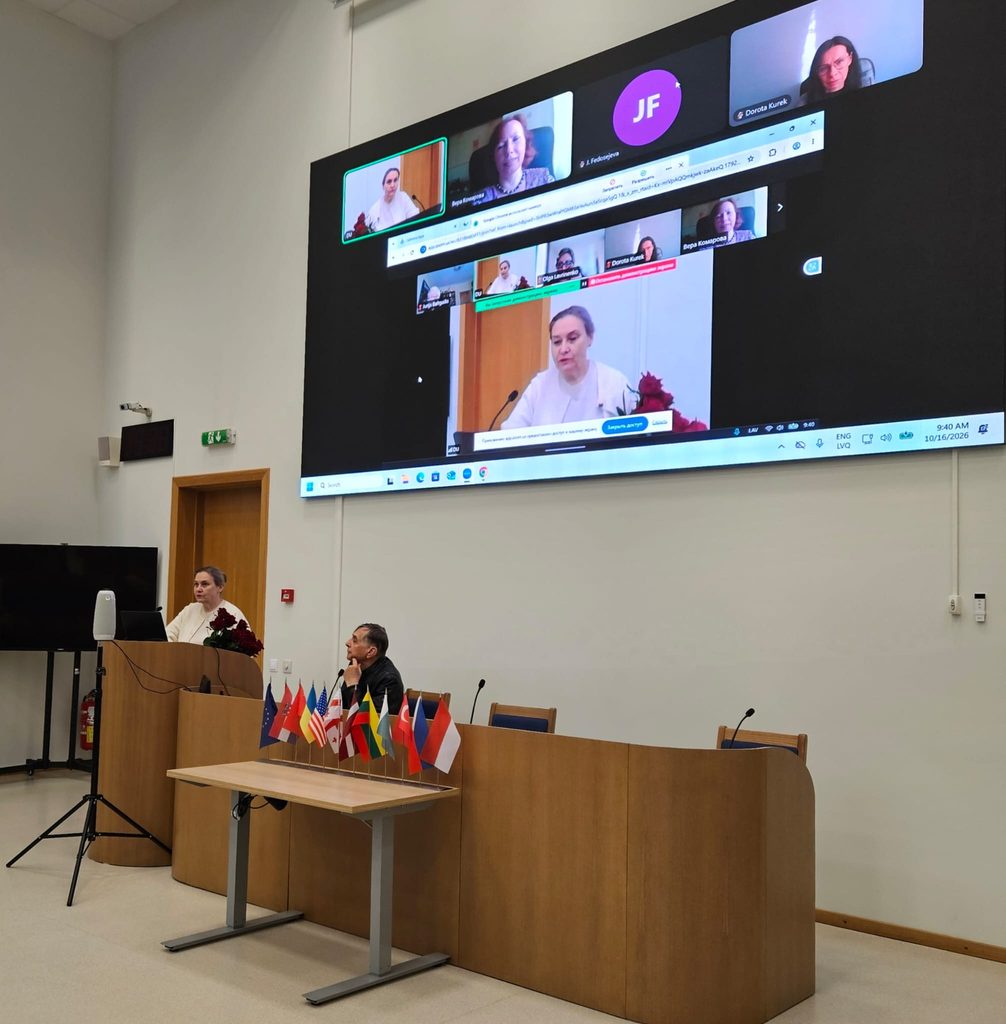
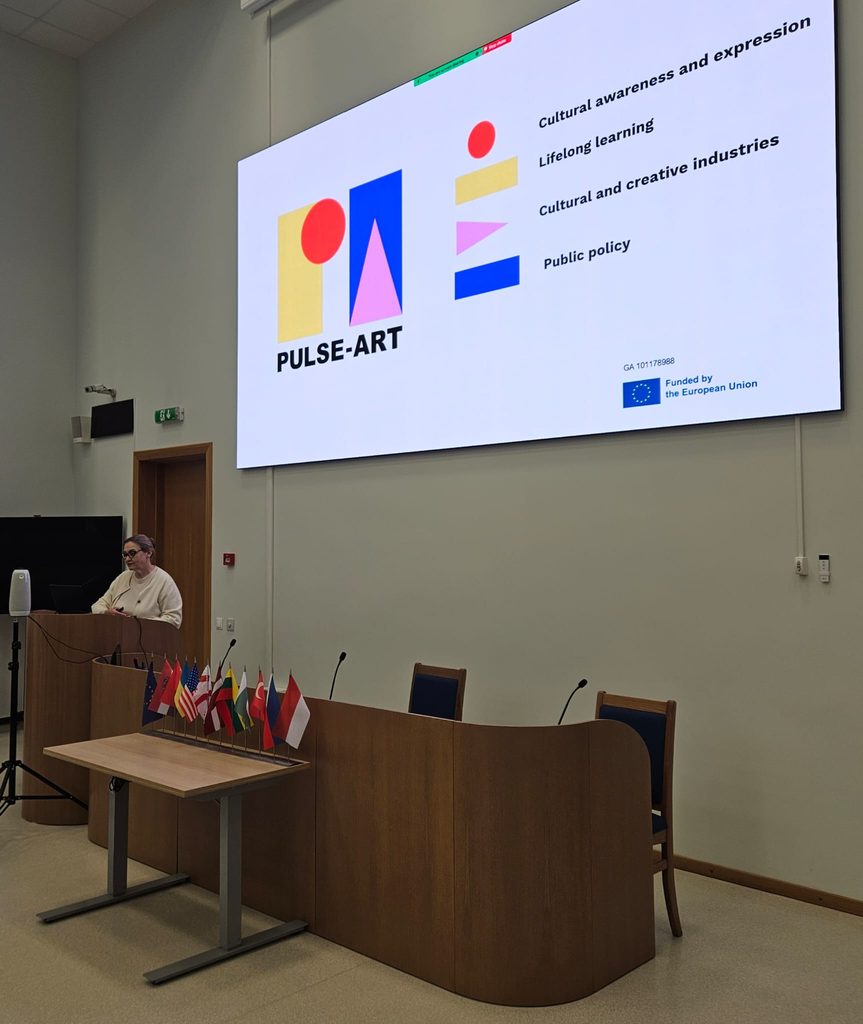
On October 16–17, 2026, the research findings of the Horizon Europe programme project PULSE-Art were presented at the 21st International Scientific Conference “Social Sciences for Regional Development 2026,” organized by Daugavpils University (DU). The presentation, entitled “Comparing National Approaches to Cultural Awareness and Expression: A Cross-National Analysis,” was prepared by professor Anita Stašulāne, leading researcher Ilze Kačāne, and leading researcher Oksana Kovzele. It was included in the conference’s plenary session, which was held in a hybrid format.
The aim of PULSE-ART is to provide clear evidence of the impact of arts-based education on cultural awareness and expression, as well as to develop tools that help harness the power of art as a driver of change in education. The project emphasizes collaboration between educational institutions and arts, cultural, and cultural heritage organizations, including museums, galleries, and cultural centres. Such collaboration can help identify gaps in the system and create learning environments in which cultural competences are developed through the arts.
Professor Anita Stašulāne explained how different national approaches to education and cultural policy promote the role of arts and culture in the learning process, as well as the barriers that hinder the achievement of these objectives. The research conducted during the project reveals a common picture: the policies of the project partner countries (Spain, France, Latvia, the Netherlands, Greece, and Malta), as well as Morocco, demonstrate a commitment to developing cultural awareness and expression. However, governance models vary, and challenges related to inconsistent participation and policy implementation persist. The analysis of the research data highlights several strengths: the inclusion of arts and cultural competences in policy documents, experiential and student-centred learning, support for inclusion, cross-sectoral collaboration, and recognition of the broader contribution of culture to society. At the same time, the project researchers have identified unequal access and a lack of resources, fragmented policy implementation, insufficient evaluation, and the risk of cultural education being perceived as an optional supplement rather than a fully-fledged area of learning. In some countries, these challenges are intensified by fragmented governance, short-term funding, and inadequate evaluation mechanisms. The research findings indicate that all project partner countries need to strengthen teachers’ professional development, particularly in the areas of inclusive, digital, and intercultural competences.
The activity was carried out within the framework of the Horizon Europe research project “Promoting Understanding and Lifelong Learning Successful Education through the ARTs and culture” (PULSE-Art, No. 101178988).
Additional information:
IHSS acting director, professor and leading researcher Anita Stašulāne
e-mail: anita.stasulane@du.lv
Leading researcher Ilze Kačāne
e-mail: ilze.kacane@du.lv
Leading researcher Oksana Kovzele
e-mail: oksana.kovzele@du.lv