Goals:
The Nature Conservation and IT-AI Solutions Laboratory (NatCons-IT-AI Lab) focuses on integrating cutting-edge technology with ecological research to enhance biodiversity conservation, monitoring, and ecosystem management.
The laboratory aims to:
- Develop IT AI-driven tools for Citizen Science, biodiversity assessment and ecosystem modeling.
- Use GIS, AI and machine learning for stakeholder engagement, habitat analysis and conservation planning.
- Enhance public engagement through interactive mobile platforms and Citizen Science initiatives.
- Foster interdisciplinary collaboration between environmental scientists, IT specialists, and policymakers.
- Support sustainable development through data-driven decision-making and automation in conservation projects.
Approach:
The laboratory employs an interdisciplinary methodology, combining environmental sciences, computer science, and artificial intelligence (AI). Key aspects of its approach include:
- Wide Data & GIS – Using satellite imagery and other data to map ecosystems, track populations dynamics, and analyze land-use changes.
- AI and Machine Learning in Conservation – Developing AI-powered tools for population monitoring, habitat monitoring, species identification, and habitat assessment.
- Big Data and GIS modeling – using Big Data and GIS for short-time and long-term bioclimatic modelling of species distribution trends, co-modeling of species interaction trends for science and nature conservation goals.
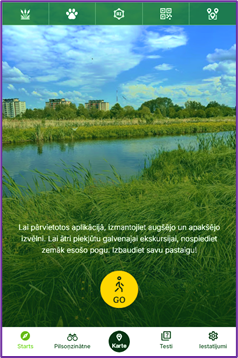
- Digital Conservation IT AI Platforms – Creating interactive databases, mobile apps, and web platforms to facilitate environmental education, Citizen Science participation, and conservation decision-making assistance.
- Automated Monitoring and Early Warning Systems – Utilizing AI-driven detection systems for illegal wildlife trade, poaching, invasive species, and climate-related risks.
- Bioinformatics and AI Analysis – Applying IT AI to assess species un populations adaptation and support conservation breeding programs.
- Sustainable Resource Management – Optimizing natural resource usage through AI-driven fisheries and wetland resource models.
Functions:
The laboratory plays a functional role in conservation technology development and scientific research by executing the following functions:
- Conducting Research & Development (R&D) – IT AI mobile solutions for Citizen Science, ecological data processing, bioclimatic modeling, and conservation strategies.
- Developing Digital Ecosystem Tools – Designing open-access Citizen Science platforms for species tracking, habitat monitoring, and ecological forecasting.
- Supporting Conservation Organizations & Governments – Assisting decision-makers in implementing AI-based solutions for wildlife protection and sustainable development policies.
- Collaborating with Universities & Research Institutions – Engaging in national and international research networks and joint projects.
- Training and Capacity Building – Offering workshops, training programs, and courses on AI Citizen Science applications in conservation for authorities, students, and environmentalists.
- Promoting Public Awareness & Citizen Science – Encouraging public participation through interactive maps, AI-driven educational tools, and gamified conservation apps.
Structure:
The laboratory operates with a multidisciplinary joint team, which has experience in:
- Remote Spatial Analyses & GIS Unit – Specializing in spatial analysis, satellite imagery processing, and orthophoto-based ecological monitoring.
- AI & Data Science Division – Focused on machine learning, data base, data analytics, and algorithm development.
- Biodiversity & Ecology Research Group – Conducting fieldwork, species monitoring, and data processing for ecological modeling.
- IT Development & Digital Platforms Team – Designing mobile apps, databases, and interactive conservation tools and IT-AI Citizen Science.
- Citizen Science & Public Engagement Hub – Coordinating community-driven conservation efforts, outreach programs, and IT-AI educational initiatives.
- Policy & Sustainable Development Team – Collaborating with stakeholders to integrate IT AI solutions into IT-AI Citizen Science and conservation policies.
Achievements:
The laboratory has made contributions in some conservation and IT-AI Citizen Science integration fields, including:
- Climate Impact Models – Created predictive tools for assessing the impact of climate change on endangered species and ecosystems.
- Large-Scale Monitoring, Habitat and Population Mapping – Generated population maps using remote spatial GIS analyses.
- Biodiversity Databases & Digital Libraries – Established online platforms integrating species and monitoring databases.
- International Research Collaborations – Published research in scientific journals and participated in conferences and seminars worldwide.
- Public-Facing Conservation IT-AI Mobile Apps – Launched IT-AI mobile applications for Citizen Science, crowd-sourced biodiversity monitoring and ecological education.
The Nature Conservation and IT-AI Solutions Laboratory continues to IT AI technological advancements in environmental protection, ensuring that AI and digital innovations in Citizen Science contribute to a more sustainable and biodiverse future.
Projects:
- 2025–2027 INTERREG project. Joint nature-based conservation of climate change/human-threatened urban LV-LT transboundary wetlands, ensuring biodiversity through innovative solutions, reintroduction and joint management. Project acronym: UrbUmbrella. Partners: LV Daugavpils City Council, LT Zarasai District Municipality Administration. Main project activities: 1) Joint sustainable innovative wetland management system (IT AI mobile app) with stakeholder engagement and e-learning; 2) Joint innovative wetland bio-expertise (bioindication, eDNA, AI, bioclimatic modelling); 3) Joint innovative nature-based wetland restoration (umbrella keyword species, reintroduction, natural disturbance emulation).
- 2022–2025 EU BiodivRestore project: Socio-ecological assessment of wetland restoration and reintroduction programmes for the conservation of the emblematic European pond turtle and associated biodiversity: a pan-European approach (EMYS-R). Proposal registration number BiodivRestore-324. Funder: BiodivRestore. Implementer: Daugavpils University. Partners: France (coordinator), Germany, Poland. Project objective: The aim of EMYS-R is to 1) investigate the ecological processes that enhance wetland restoration and Emys reintroduction, based on a) a focus on habitat recovery after restoration using biocenotic indices; b) a focus on Emys, monitoring reintroduced populations and their impact on other species using state-of-the-art biological logging and eDNA methods. 2) assess trade-offs and synergies between objectives, benefits and policies, a) ecologically focusing on non-target species (threatened amphibians and invasive crayfish); b) socio-economically focusing on the benefits of restoration, people’s perceptions of restored nature, citizen science and the deliberative processes involved in multi-stakeholder decision-making in nature conservation. 3) ultimately develop guidelines for optimal wetland restoration protocols supporting Emys reintroduction and people’s engagement in nature conservation, based on a) our integrated approach, b) a review of past and current results and c) a new model that predicts Emys distribution and abundance in the near future at a European scale. This first-ever integrated analysis of socio-ecological processes in degraded wetlands will lead to socially supported, effective wetland restoration, supporting the iconic emys and its associated local biodiversity across Europe.
- 2023–2024. LVAFA project. Development of Latgale Zoo/Wetland biodiversity IT-Guide mobile application and QR-Stands. Partner: Nature Conservation Board. Project essence: LZ/MB IT-MI interactive environmental awareness and ecological education 4D environment has been developed, which includes an IT-MI guide geolocation interactive mobile application and a complex of 4 QR-stands with interactive environmental awareness-promoting, ecologically educational and educational Latgale biodiversity content related to nature protection. Latvian and world services (WikipediaLV, WikipediaEng, Youtube, DOI, etc.).
- 2022–2024. LZP Latvian Science Council project: Ecological and socio-economic threshold values as a basis for determining adaptive management drivers in Latvian pond aquaculture. Implementer: Daugavpils University. Project objective: To determine ecological and socio-economic thresholds and drivers for pond aquaculture using environmental and socio-economic performance modelling and Multi-Stakeholder Reference Group (MARG) environmental and sustainability management guidelines.
- 2019–2024. European Cooperation in Science and Technology (COST). COST Action CA18221, PESTICIDE RISK ASSESSMENT FOR AMBIANS AND REPTILIES (PERIAMAR). Memorandum of Understanding COST 05.05.2024. Founder: Horizon 2020.
Vision of the Nature Conservation and IT-AI Solutions Laboratory
The Nature Conservation and IT-AI Solutions Laboratory envisions a future where artificial intelligence, digital technology, and ecological science work in harmony to protect biodiversity, restore ecosystems, and empower communities to engage in sustainable conservation efforts.
Our vision is to:
Develop Nature Conservation with IT-AI
- Harness the power of artificial intelligence, machine learning, and big data to create smart, scalable, and predictive solutions for biodiversity protection.
- Develop monitoring solutions that provide operative insights into species populations and habitat health.
- Develop geospatial strategic modeling that integrates Big Data, monitoring data, and predictive modeling to monitor species and ecosystems at a global scale.
Enhance Decision-Making for a Sustainable Future
- Provide IT AI-driven tools that support evidence-based policy decisions in conservation, climate adaptation, and natural resource management.
- Offer real-time environmental IT-AI insights to help governments, organizations, and communities implement effective and adaptive conservation strategies.
Empower Local & Global Communities through Digital Conservation
- Enable citizen science participation through interactive, AI-assisted mobile applications that allow individuals to contribute to biodiversity research.
- Use augmented reality (AR) to create immersive ecological education experiences that inspire action.
Advance Interdisciplinary Collaboration for Environmental Innovation
- Bridge the gap between environmental research, computer science, and sustainability policy to create transformative conservation IT-based technologies.
- Strengthen partnerships between academia, industry, NGOs, and government agencies to drive AI-powered ecological solutions.
“ NatCons-IT-AI Lab: Where IT-AI Technology Meets Nature – Building a Smarter, Sustainable, Green Planet.”
Publications with the co-authorship of the Lab team members:
- Vilizzi, L., Suresh, V. R., Giannetto, D., Hill, J. E., Daniel, W. M., Monteiro, J. G., Edsman, L., Elmi, H. Sh. A., Awale, A. I., Najafi-Majd, E., Mammadov, R., Andriyono, S., Djumanto, Azmai, M. N. A., Saba, A., Kalamujić Stroil, B., Adrović, A., Vila-Gispert, A., Boix, D., Kopecký, O., Pavlů, V., Milošević, D., Caković, D., Holbech, H., Lundgreen, K., Lukas, J., Ahnelt, H., Linnamägi, M., Rohtla, M., Almeida, D., Mendoza, R., Fuentes Parada, N., Gilles, A. S., Jr., Pavia, R. T. D., Jr., Knudsen, E., Hansen, L. J., Goulletquer, P., Curd, A., Špelić, I., Jónsson, J. E., Thráinsson, H., Boggero, A., Pupins, M., Škute, A., Petrulaitis, L., Jukonienė, I., Herczeg, G., Ferincz, Á., Verreycken, H., Leuven, R. S. E. W., Malmstrøm, M., Velle, G., Makhkamov, T., Yuldashev, A., Pietraszewski, D., Marszał, L., Canning-Clode, J., Pasuch de Camargo, M., Preda, C., Memedemin, D., Bakiu, R., Bakiu, S., Slovák Švolíková, K., Števove, B., Duniš, L., Kristan, P., Simonović, P., Dekić, R., Puntila-Dodd, R., Jauni, M., Olsson, K. H., Ta, K. A. T., Bui, T. D., Yoğurtçuoğlu, B., Ağdamar, S., Yuldashov, B., Khydyrov, P., Vardakas, L., Koutsikos, N., Perdikaris, C., Lukashanets, D., Borodin, O., Uzunova, E., Dashinov, D., Lazkov, G., Ganybaeva, M., Ualiyeva, D., Zharmukhametova, R., Ristovska, M., Cvetkovska Gjorgjievska, A., Ganbaatar, B., Khadbaatar, S., Panov, V. E., Marenkov, O., Saidov, N., Okhonniyozov, M., Kvach, Y., Yuryshynets, V., Arakelyan, M., Khachatryan, H., Mumladze, L., Japoshvili, B., Pickholtz, R., Gavriel, T., Atique, U., Altaf, M., Iqbal, S., Al-Wazzan, Z., Chebaane, S., Hamdard, M. H., Osmani, A. R., Moghaddas, S. D., Javidpour, J., Nashath, M., Abdullah, F., Sharma, H. P., Shrestha, B. B., Vibhakaran, V., Galib, S. M., Khan, Md. A. G., Epa, U. P. K., Cassim, N., De Zoysa, M., Chaichana, R., Kanongdate, K., Chan, N., Ko Ko, L. M., Dorji, J., Dorji, C., Inkhavilay, K., Somvongsa, C., Soben, K., Nida1, Y., Tesfay, Y. B., Dullo, B. W., Oh, C., Park, Y., Li, S., Wei, H., Koyama, A., Isobe, A., Piria, M. (2026): Global framework for communication of biological invasion risks.– Management of Biological Invasions: 17, 1: 1–33. https://doi.org/10.3391/mbi.2026.17.1.01 WoS. SCOPUS Q2.
- Van der Zon K.A.E., Grac C., Theissinger K., Paidere J., Brakovska A., Pupiņš M., Škute A., Razafindralay L., Georges J.Y., Combroux I. (2026): Environmental and spatial processes structuring macrophyte metacommunities in restored pondscapes. – Ecological Engineering, 222, 107789. https://doi.org/10.1016/j.ecoleng.2025.107789. WoS. SCOPUS. Q1.
- Nekrasova O., Pupins M., Tytar V., Čeirāns A., Marushchak O., Škute A., Theissinger K., Georges J.-Y. (2025): Ensemble modelling for smart conservation strategies for forest reptile species at their range edges in Europe amidst climate change. – Geography and Sustainability, 6 (2025) 100266. https://doi.org/10.1016/j.geosus.2025.100266. WoS, SCOPUS. Quartile: Q1.
- Čeirāns A., Pupins M., Skute A., Nekrasova O., Kirjusina M., Combroux I., Grac C., Kvach Y., van der Zon K.A.E., Theissinger K., Georges J.-Y. (2024): Identification and use of suitable metrics for calling male countbased community assessments in amphibian monitoring in temperate Europe. – Ecological Indicators. Volume 168, 112771. https://doi.org/10.1016/j.ecolind.2024.112771, WoS. SCOPUS. Q1.
- Nekrasova O., Pupins M., Marushchak O., Tytar V., Martinez‑Silvestre A., Škute A., Čeirāns A., Theissinger K., Georges J.-Y. (2024): Present and future distribution of the European pond turtle versus seven exotic freshwater turtles, with a focus on Eastern Europe. – Scientific Reports, 14:21149. https://doi.org/10.1038/s41598-024-71911-4. WoS. SCOPUS. Q1.
- Nekrasova O., Pupins M., Tytar V., Fedorenko L., Potrokhov O., Skute A., Ceirāns A., Theissinger K., Georges J.-Y. (2024): Assessing prospects of integrating asian carp polyculture in Europe: a nature-based solution under climate change? – Fishes, 9, 148. EISSN 2410-3888. https://doi.org/10.3390/fishes9040148. WoS, SCOPUS. Q2.
- Nekrasova O., Marushchak O., Pupins M., Bolotova K., Čeirāns A., Skute A. (2023): Phenotypic study of population and distribution of the Poecilia reticulata Peters, 1859 (Cyprinodontiformes, Poeciliidae) from Kyiv sewage system (Ukraine). – Zoodiversity, 57(4). https://doi.org/10.15407/zoo2023.04.301. SCOPUS. Q3.
- Čeirāns A., Pupins M., Kirjusina M., Gravele E., Mezaraupe L., Nekrasova O., Tytar V., Marushchak O., Garkajs A., Petrov I., Skute A., Georges J.-Y., Theissinger K. (2023): Top-down and bottom-up effects and relationships with local environmental factors in the water frog–helminth systems in Latvia. – Scientific Reports, 13: 8621. https://doi.org/10.1038/s41598-023-35780-7. WoS. SCOPUS. Quartile: Q1.
- Tytar V., Nekrasova O., Pupins M., Skute A., Kirjusina M., Gravele E., Mezaraupe L., Marushchak O., Čeirāns A., Kozynenko I., Kulikova A. (2023): Modelling the distribution of the chytrid fungus Batrachochytrium dendrobatidis, with special reference to Ukraine. – Journal of Fungi, 9(6): 607. https://doi.org/10.3390/jof9060607. H-Index 39. WoS. SCOPUS. Q1.
- Pupins M., Nekrasova O., Tytar V., Garkajs A., Petrov I., Morozova A., Theissinger K., Čeirāns A., Skute A. Georges J.-Y. (2023): Geographically isolated wetlands as a reserve for the conservation of amphibian biodiversity at the edge of their range. – Diversity, 15, 461. https://doi.org/10.3390/d15030461 ISSN 1424-2818. SCOPUS. Q2.
- Pupins M., Martinez-Silvestre A., Arribas O., Čeirāns A., Kirjusina M. (2023): First records of Scinax ruber, Podarcis siculus, Podarcis ionicus and its parasites in Latvia: fruits trade is an intercontinental alien herpetofauna and parasitofauna invasion vector into Europe. – BioInvasions Records, 12 (1): 321–329. https://doi.org/10.3391/bir.2023.12.1.29. SCOPUS. Q2.
- Pupins M., Nekrasova O., Marushchak O., Tytar V., Theissinger K., Čeirāns A., Skute A., Georges J.-Y. (2023): Potential threat of an invasive fish species for two native newts inhabiting wetlands of Europe vulnerable to climate change. – Diversity, 15, 201. https://doi.org/10.3390/d15020201. SCOPUS. Q2.
- Tytar V., Nekrasova O., Pupins M., Skute A., Fedorenko L., Čeirāns A. (2022): Modelling the range expansion of pumpkinseed Lepomis gibbosus across Europe, with a special focus on Ukraine and Latvia. – North-Western Journal of Zoology, 18 (2): 143-150. Article No.: e221403. https://biozoojournals.ro/nwjz/content/v18n2.html. https://zenodo.org/uploads/14738556. SCOPUS. Q4.
- Nekrasova O., Tytar V., Pupins M., Čeirāns A. (2022): Range expansion of the alien red-eared slider Trachemys scripta (Thunberg in Schoepff, 1792) (Reptilia, Testudines) in Eastern Europe, with special reference to Latvia and Ukraine. – BioInvasions Records, 11 (1): 287–295. https://doi.org/10.3391/bir.2022.11.1.29. SCOPUS. Q2.
- Jablonski D., Sillero N., Oskyrko O., Bellati A., Carranza S., Čeirāns A., Cheylan M., Cogălniceanu D., Crnobrnja-Isailović J., Crochet P.-A., Crottini A., Doronin I., Džukić G., Geniéz P., Ilgaz C., Iosif R., Jandzik D., Jelic D., Ljubisavljević K., Lymberakis P., Mikulíček P., Mizsei E., Moravecx J., Najbar B., Pupins M., Sourrouille P., Strachinis I., Szabolcs M., Thanou E., Tzoras E., Vergilov V., Vörös J., Gvoždíkx V. (2021): The distribution and biogeography of slow worms (Anguis, Squamata) across the Western Palearctic, with an emphasis on secondary contact zones. – Amphibia-Reptilia, 42(4), 519-530. DOI: https://doi.org/10.1163/15685381-bja10069. SCOPUS. Q1.
- Rubenina I., Kirjusina M., Ceirans A., Gravele E., Gavarane I., Pupins M., Krasnov B.R. (2021): Environmental, anthropogenic, and spatial factors affecting species composition and species associations in helminth communities of water frogs (Pelophylax esculentus complex) in Latvia. – Parasitology Research, 120: 3461–3474. https://doi.org/10.1007/s00436-021-07303-8. ISSN: 09320113, 14321955. SCOPUS. Q1.
- Nekrasova O., Tytar V., Pupins M., Čeirāns A., Marushchak O., Skute A. (2021): A GIS modeling study of the distribution of viviparous invasive alien fish species in Eastern Europe in terms of global climate change, as exemplified by Poecilia reticulata Peters, 1859 and Gambusia holbrooki Girarg, 1859. – Diversity, 13(8), 385. https://doi.org/10.3390/d13080385. SCOPUS. Q2.
- Čeirāns A., Gravele E., Gavarane I., Pupins M., Mezaraupe L., Rubenina I., Kvach Y., Skute A., Oskyrko O., Nekrasova O., Marushchak O., Kirjusina M. (2021): Helminth communities in amphibians from Latvia with an emphasis on their connection to host ecology. – Journal of Helminthology, 95, E48. https://doi.org/10.1017/S0022149X2100047X. SCOPUS. Q1.
- Nekrasova O., Marushchak O., Pupins M., Skute A., Tytar V., Čeirāns A. (2021): Distribution and potential limiting factors for European pond turtle’s (Emys orbicularis) populations of Eastern Europe. – Diversity, 13(7): 280. https://doi.org/10.3390/d13070280. SCOPUS. Q2.
- Gvoždík V., Harca Z., Hánová A., Jablonski D., Pupins M., Paasikunnas T., Čeirāns A. (2021): Two species of slow worm (Anguis fragilis, A. colchica) present in the Baltic region. – Amphibia-Reptilia, 1481. https://doi.org/10.1163/15685381-bja10055. SCOPUS. Q1.
- Kutsokon Y., Tkachenko M., Bondarenko O., Kvach Y, Pupins M., Snigirova A., Berezovska V., Čeirāns A. (2021): The role of invasive Chinese sleeper Perccottus glenii Dybowski, 1877 in the Ilgas Nature Reserve ecosystem: an example of a monospecific fish community. – BioInvasions Records, 10(2): 396-410. https://doi.org/10.3391/bir.2021.10.2.18. SCOPUS. Q2.
- Kvach Yu., Kutsokon Ju., Roman A., Kirjušina M., Čeirāns A., Pupins M. (2020): Parasite Acquisition by the Invasive Chinese Sleeper (Perccottus glenii Dybowski, 1877) (Gobiiformes: Odontobutidae) in Latvia and Ukraine. – Journal of Applied Ichthyology, 36: 785-794. Article ID: JAI14100. https://doi.org/10.1111/jai.14100. SCOPUS. Q3.
- Grabowska J., Kvach Y., Rewicz T., Pupins M., Kutsokon J., Dykyy I., Antal L., Zięba G., Rakauskas V., Trichkova T., Čeirāns A., Grabowski M. (2020): First insight into the molecular population structure and origins of the invasive Chinese sleeper, Perccottus glenii, in Europe. – NeoBiota: 57: 87-107. https://doi.org/10.3897/neobiota.57.48958. WoS. SCOPUS. Q1.
- Čeirāns A., Pupins M., Pupina A. (2020): A new method for estimation of the minimum adult frog density from a large-scale audial survey. – Scientific Reports: 10:8627. https://doi.org/10.1038/s41598-020-65560-6. WoS. SCOPUS, Q1.
- Nekrasova O., Yanish Y., Tytar V., Pupins M. (2019): GIS -modeling of the range shifts of the sub-fossil and extant European pond turtle (Emys orbicularis) in Eastern Europe in the Holocene. – Diversity, 11 (8): 121 (11 pp). https://doi.org/10.3390/d11080121. SCOPUS. Q1.


.svg)