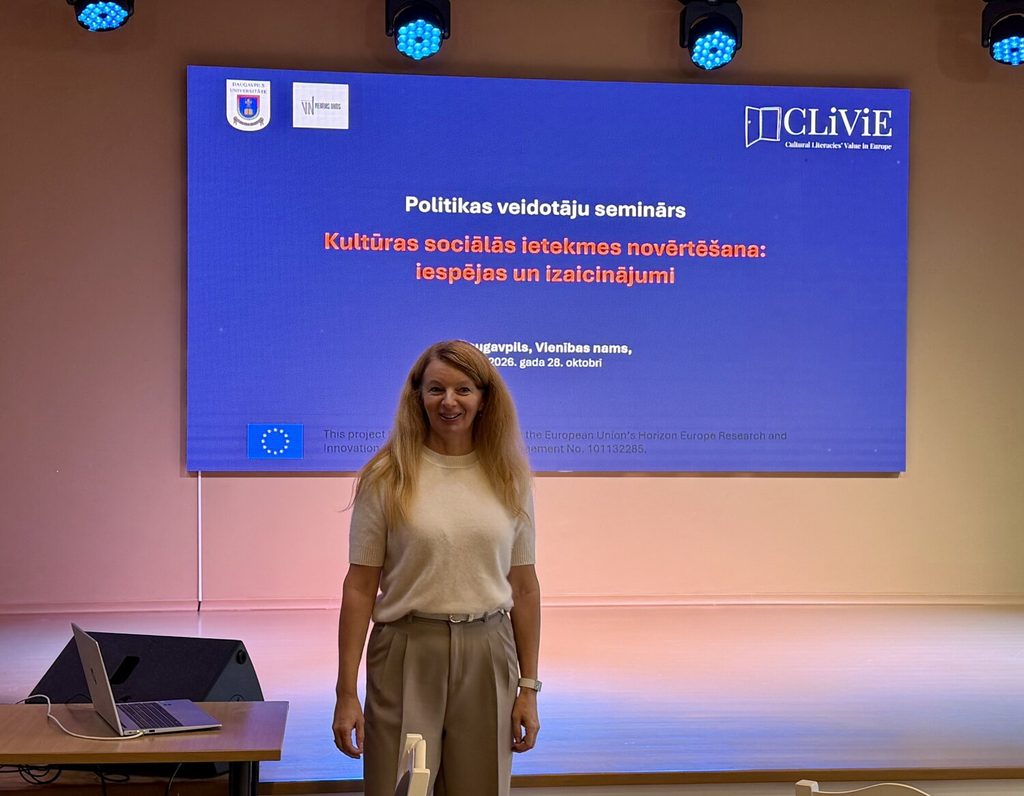
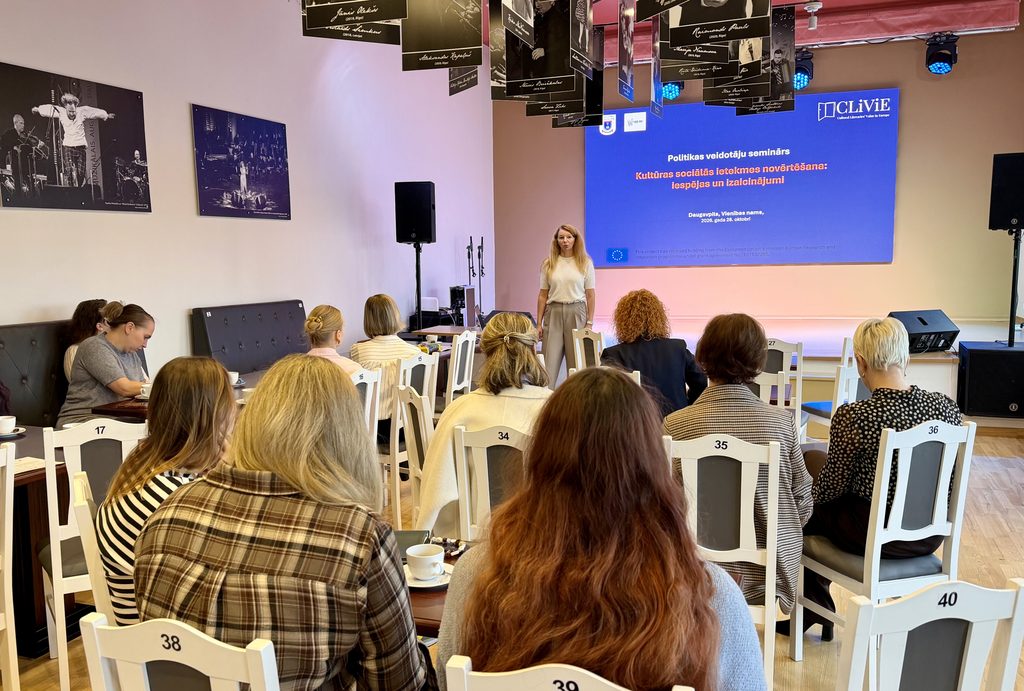
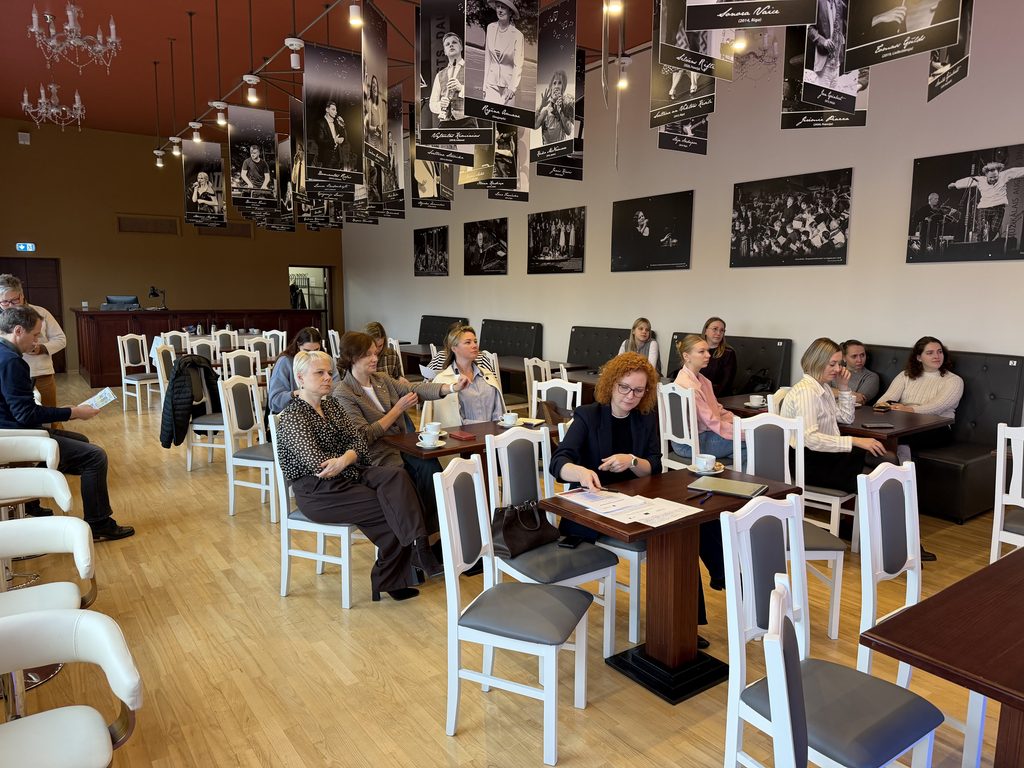
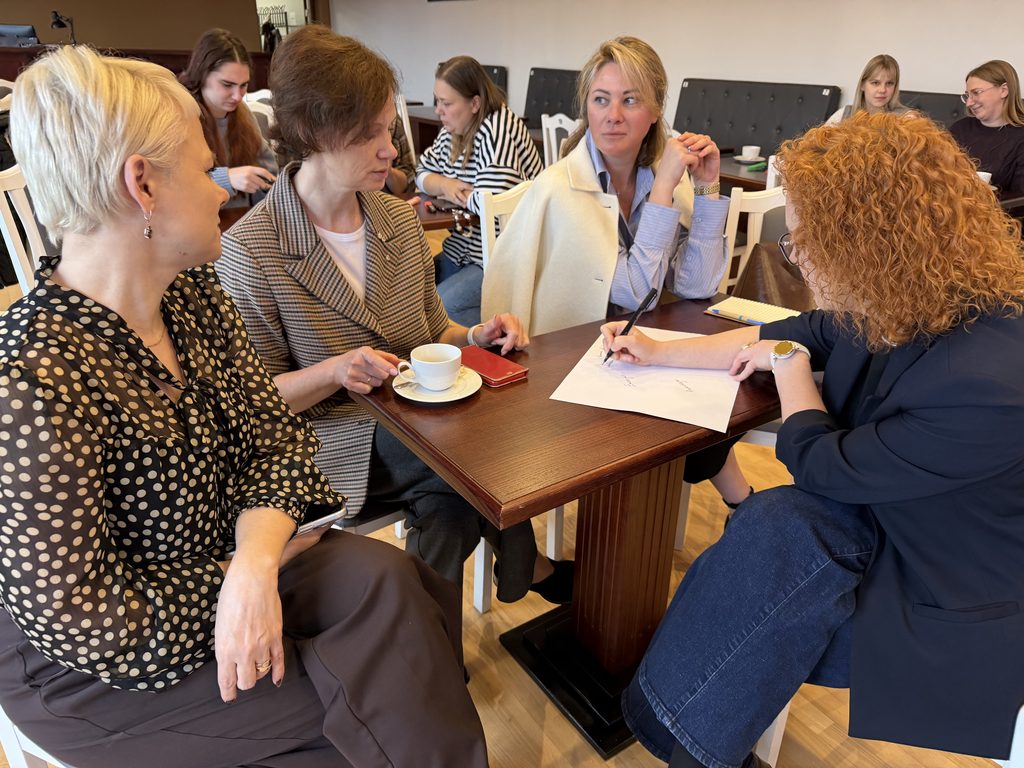
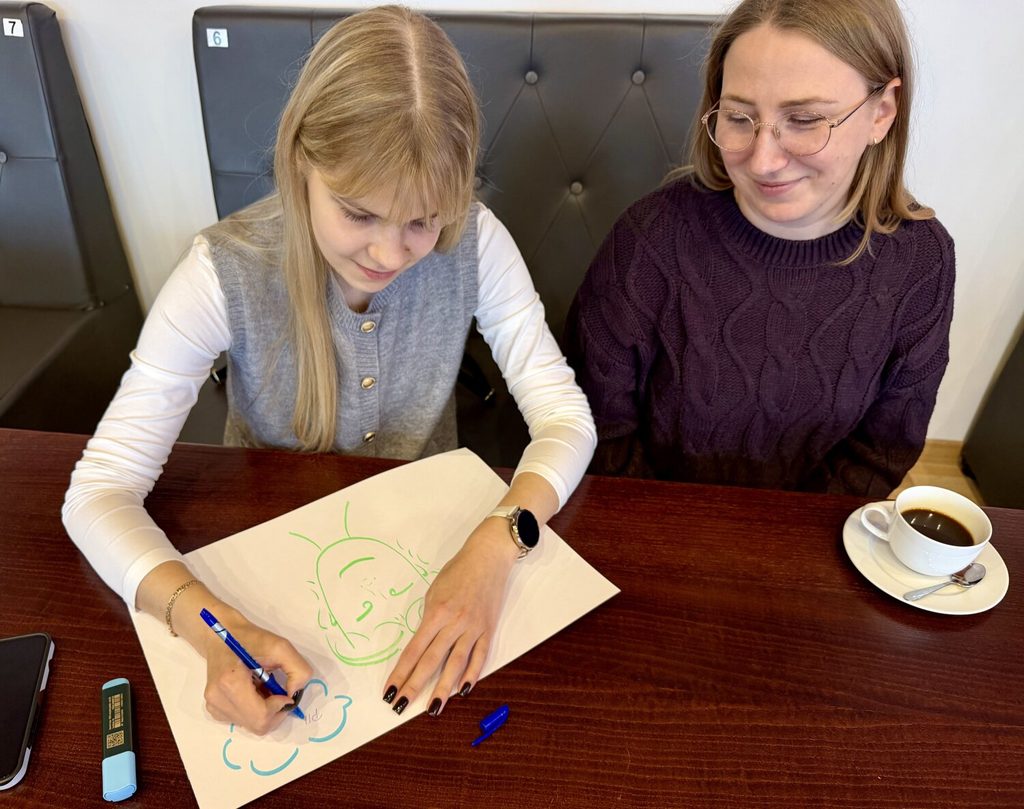
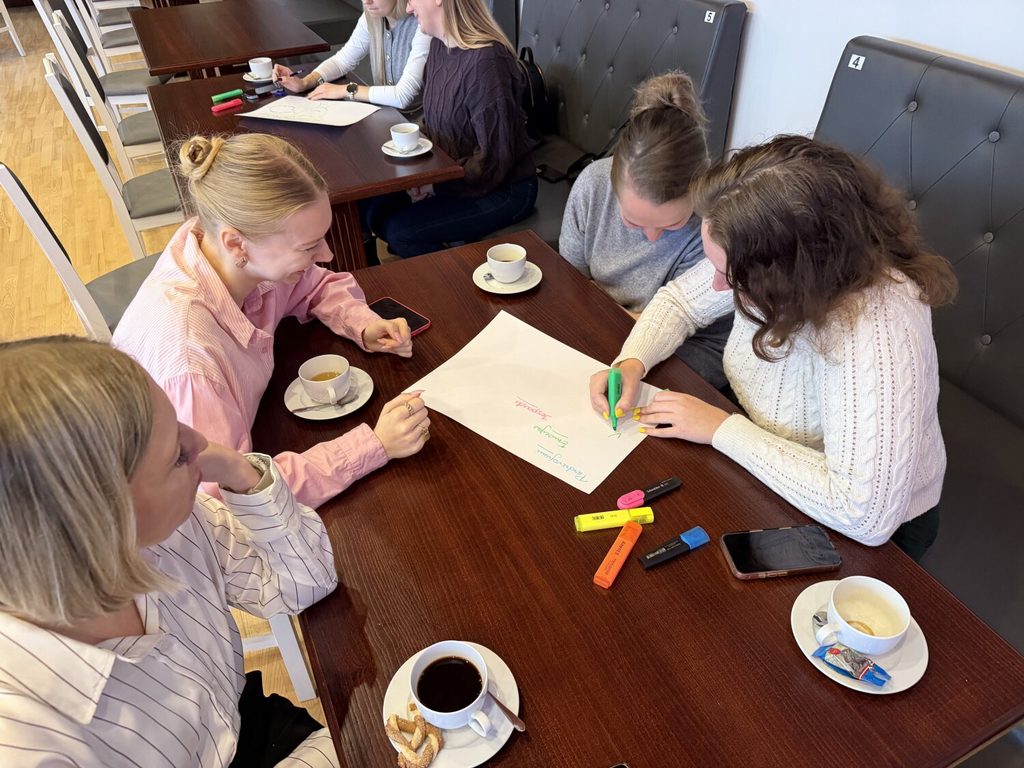
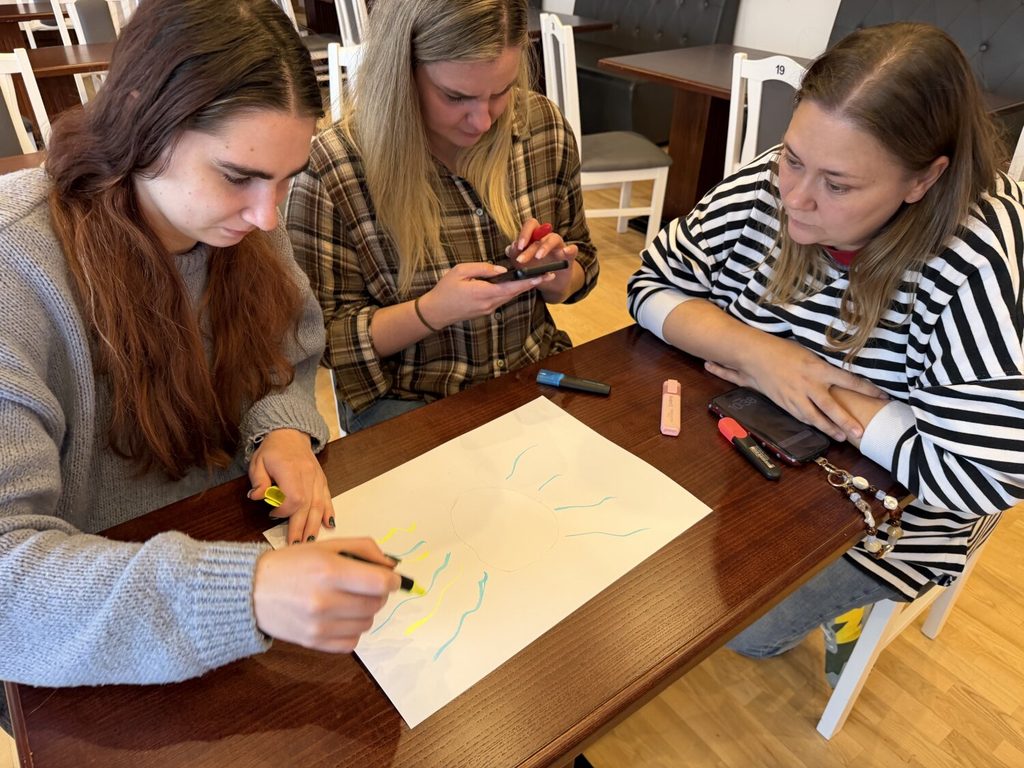
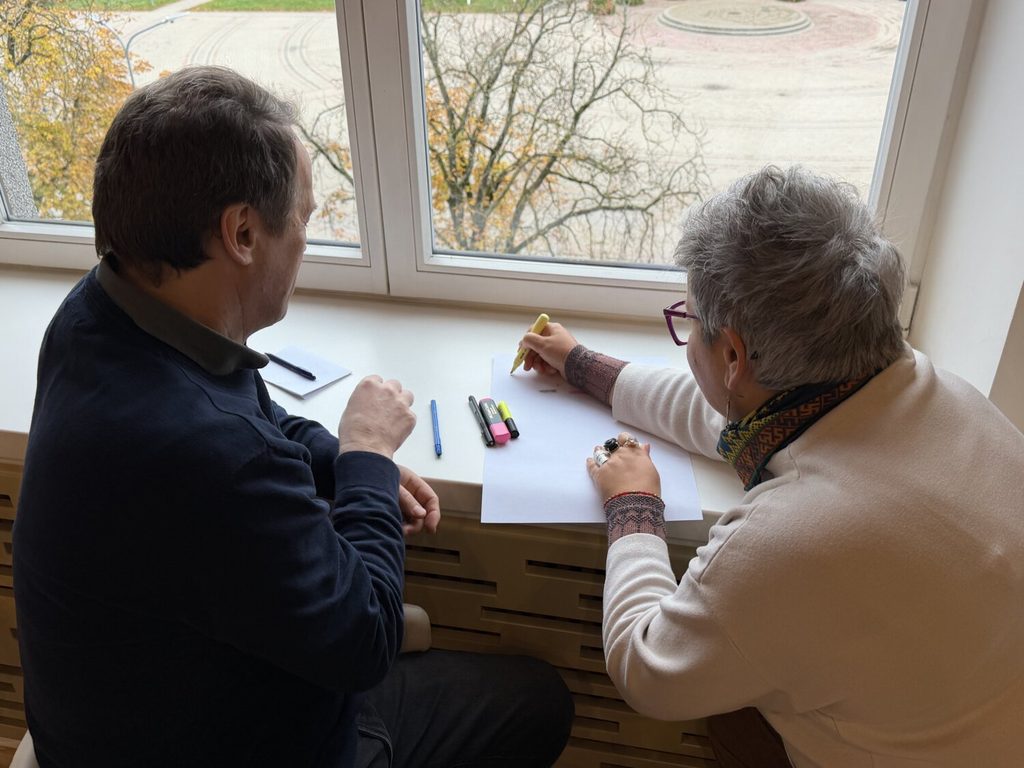
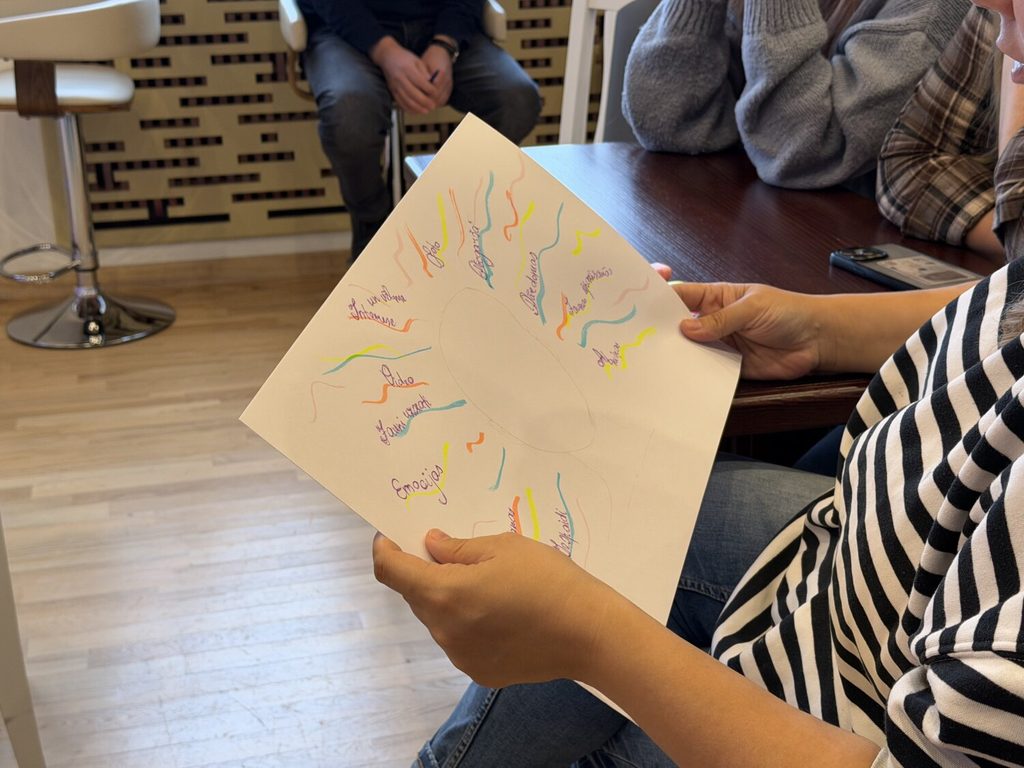
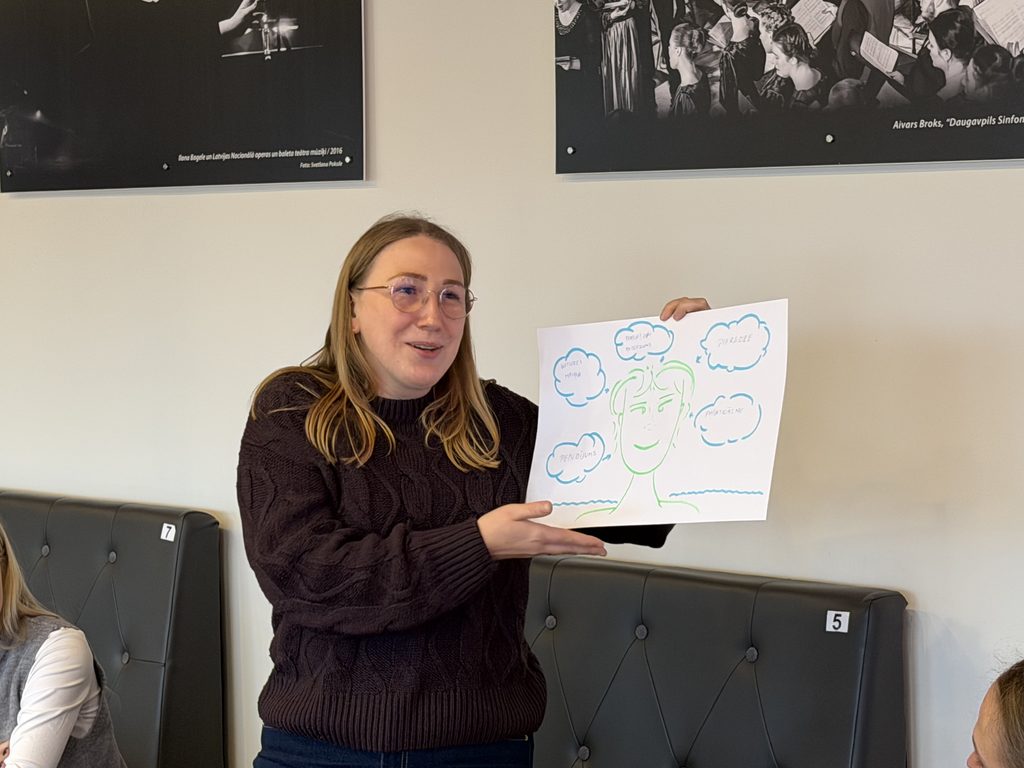
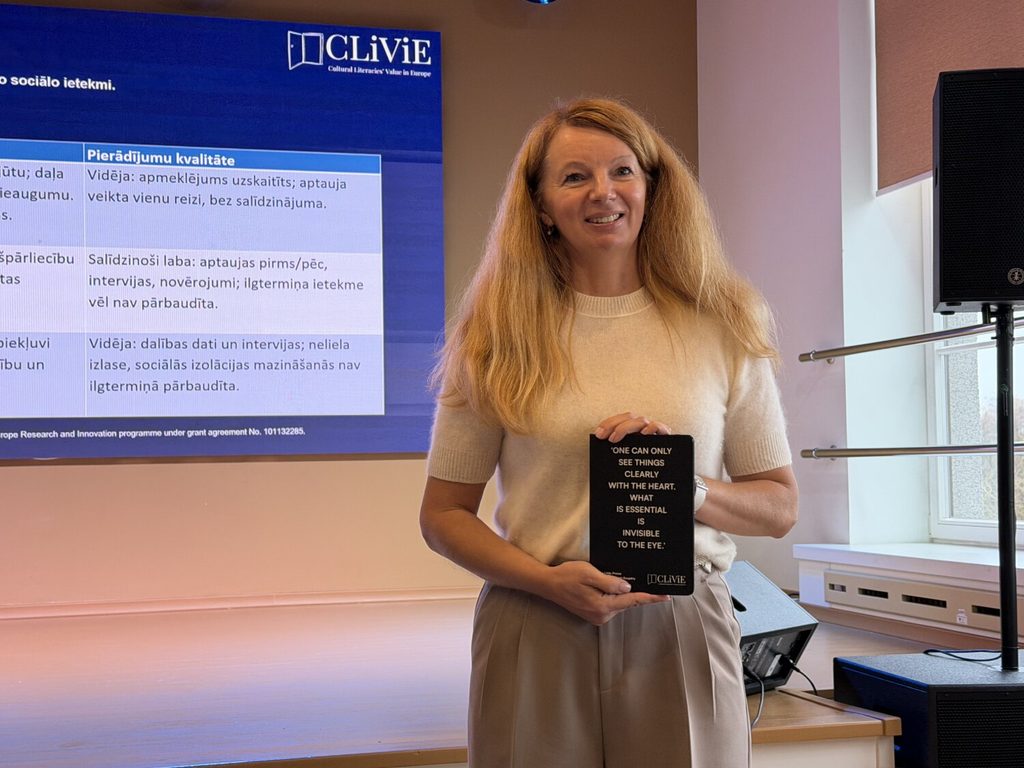
How can we assess the true value of culture to society? Can the value of cultural projects be measured not only by visitor numbers but also by the changes they bring to people’s lives? These questions were at the heart of the seminar “Assessing the Social Impact of Cultural Literacy: Opportunities and Challenges”, held on 28 October in Daugavpils at Vienības nams Cultural Centre. The event was organised as part of the Horizon Europe project Cultural Literacies’ Value in Europe (CLiViE) and brought together 17 representatives from the cultural policy and cultural education sectors in the Latgale region and the city of Daugavpils. Participants included members of Daugavpils City Council, representatives of the Southern Latgale NGO Support Centre, the Daugavpils City Education, Youth and Sports Department, the municipal institution “Vienības nams”, the Daugavpils Culture Centre, and leaders of youth non-governmental organisations.
Participants explored approaches to assessing the social impact of culture developed and applied within the CLiViE project, including Theory of Change (ToC)and Social Return on Investment (SROI). A case study conducted at the Rothko Museum illustrated how changes resulting from cultural activities can be identified, supported by research evidence, and assessed in economic terms. The seminar generated lively discussions about the practical application of these methods in municipal policy and decision-making. Marina Isupova, Head of the Daugavpils Education, Youth and Sports Department, highlighted the relevance of Theory of Change, emphasising the importance of beginning the planning process with the desired changes and long-term impact rather than simply listing planned activities. Diāna Soldāne, Director of Vienības nams Cultural Centre, stressed the mutual benefits of such exchanges, which give municipal employees and policymakers access to research findings and scientifically grounded methods while strengthening dialogue between cultural professionals, educators, and researchers.
One of the most engaging parts of the seminar was the interactive exercise “You Have €100,000!”, in which participants were challenged to allocate a limited municipal budget among three hypothetical cultural projects. Initially, decisions were based on conventional project evaluation indicators. However, after receiving additional information about the projects’ potential social impact, participants were invited to reconsider their priorities and arguments. The exercise stimulated discussion about how to balance economic considerations, community needs, and the long-term benefits of cultural initiatives. The seminar demonstrated a strong interest in closer cooperation between researchers and municipal representatives, highlighting the potential of research-based evidence and impact assessment methods to inform cultural policy planning and decision-making.
Further information:
Alīna Romanovska
CLiViE Project Leader at Daugavpils University
Associate Professor and Leading Researcher at the Institute of Humanities and Social Sciences
alina.romanovska@du.lv
The project has received funding from the European Union’s “Horizon Europe” Research and Innovation programme under the grant agreement No. 101132285.