.svg)


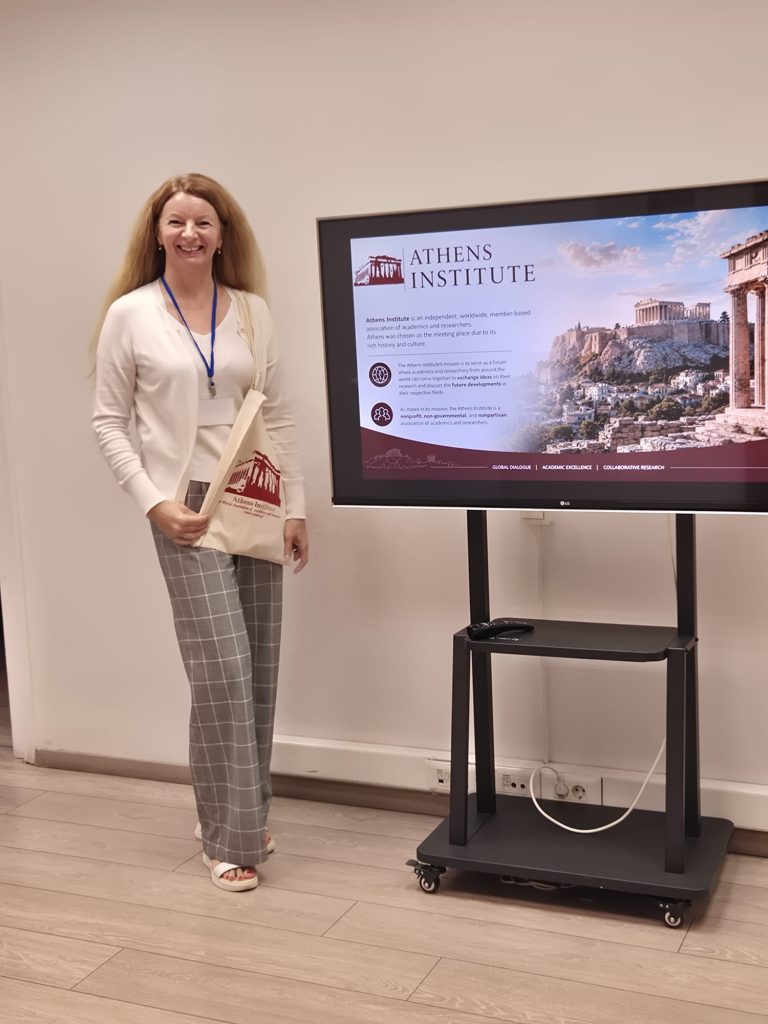
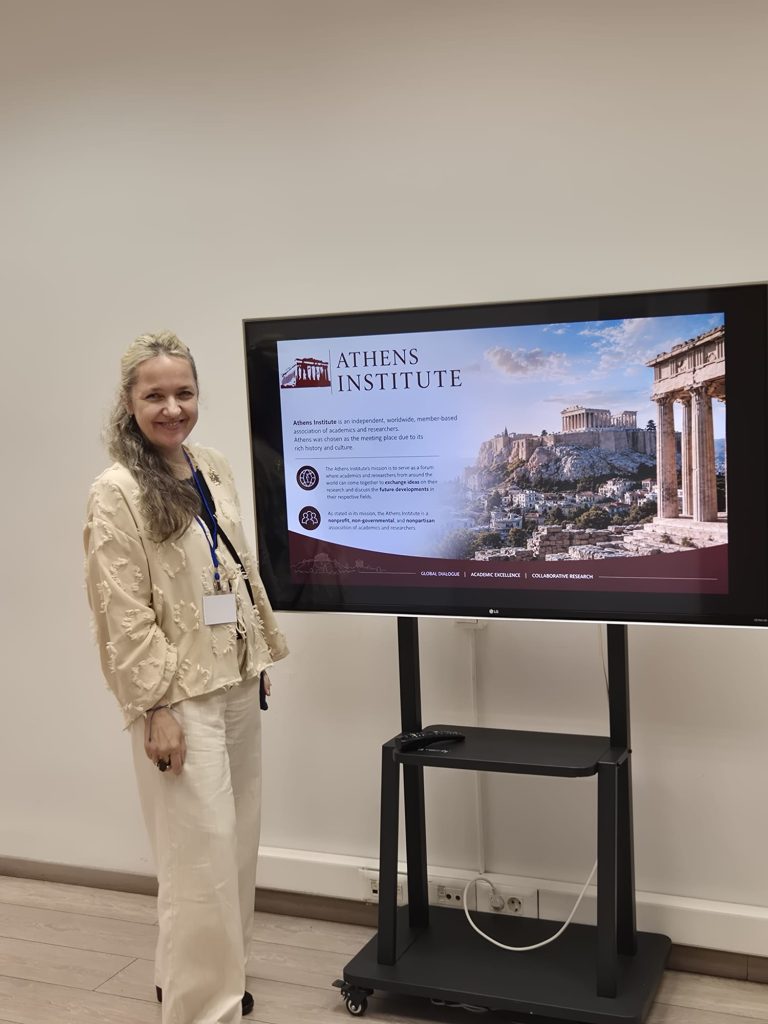
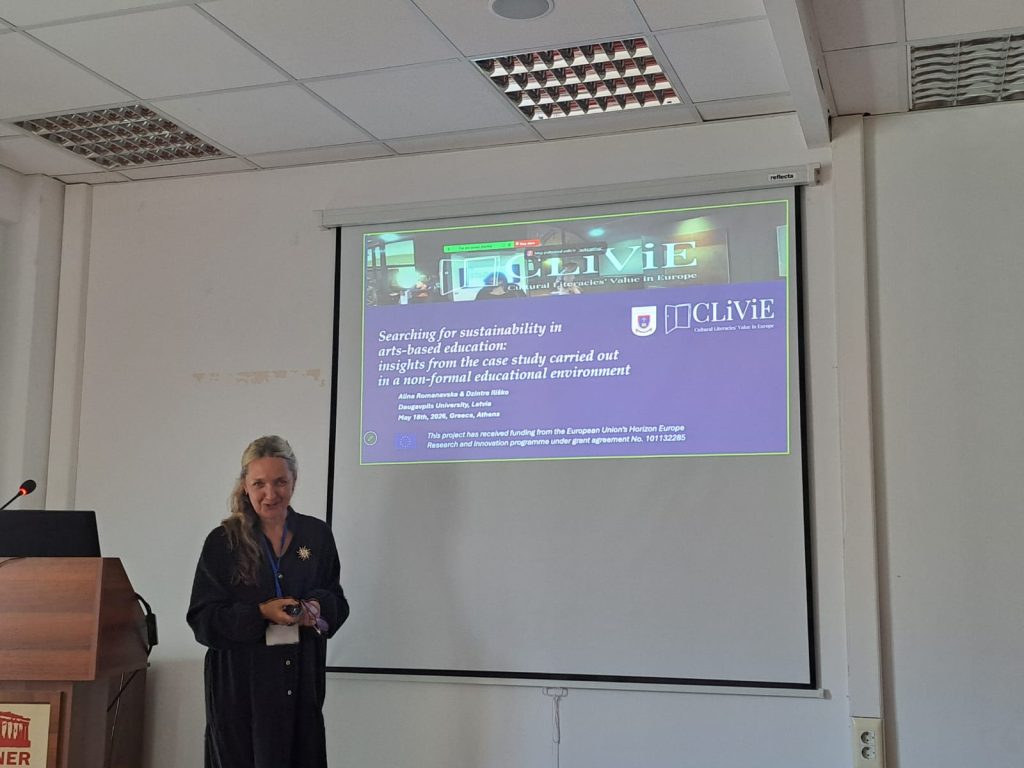
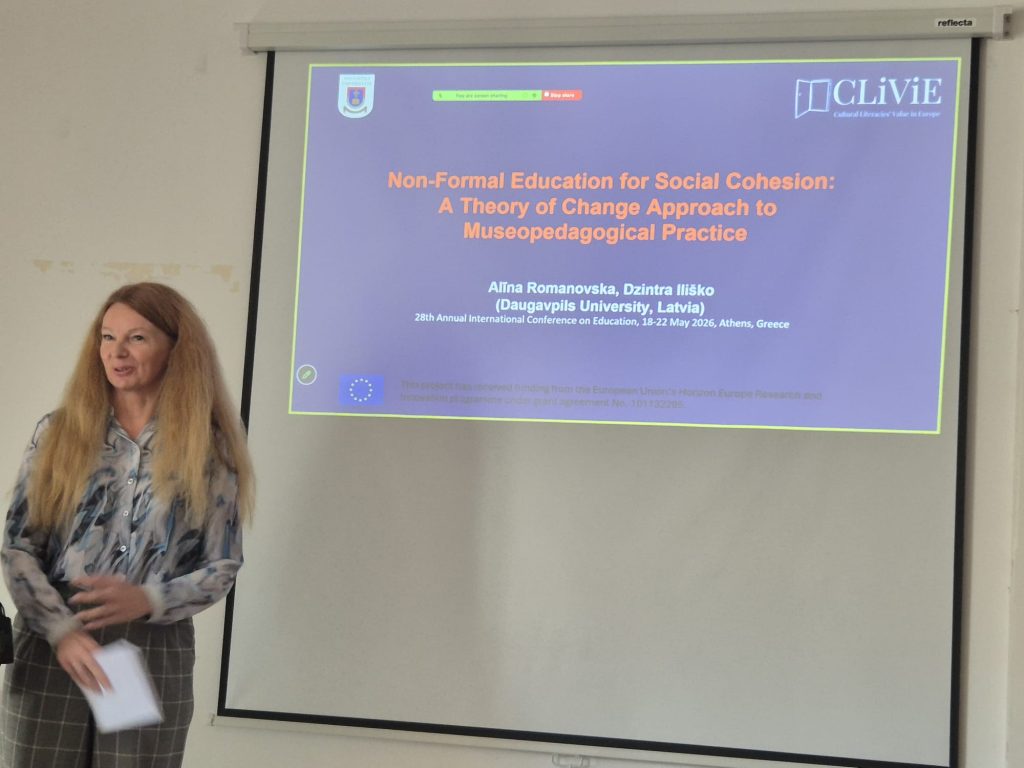
From 18 to 22 May 2026, Professor Dzintra Iliško and Associate Professor Alīna Romanovska from the Institute of Humanities and Social Sciences participated in the 28th Annual International Conference on Education in Athens, Greece, where they presented two jointly developed studies on the role of arts-based non-formal education in fostering a sustainable society.
The first presentation explored the application of the Theory of Change approach in museum education practice, examining how arts-based non-formal education contributes to social cohesion and the development of cultural literacy among young people. Particular attention was devoted to the Daugavpils case study The Other in Art and Life, implemented in cooperation with the Rothko Museum.
The second presentation addressed arts-based education as a pathway toward understanding and building a sustainable society, emphasizing that engagement with art and cultural experiences helps young people develop creativity, empathy, social responsibility, and the capacity to perceive sustainability not only as a policy objective but also as an everyday practice.
Both presentations attracted considerable interest from the international audience, particularly during discussions on the application of Theory of Change methodology for evaluating educational impact and on the potential of arts-based education to foster socially cohesive and sustainable communities. Conference participants highly appreciated the interdisciplinary nature of the studies and their connection between cultural education, social cohesion, and sustainable development goals.
Both studies were developed within the framework of the European Union Horizon Europe project “Cultural Literacies’ Value in Europe (CLiViE)”.
Further information about the event:
IHSS Prof. Dzintra Iliško
dzintra.ilisko@du.lv
IHSS Assoc. Prof. and leading reseacher Alīna Romanovska
e-mail: alina.romanovska@du.lv
Further information about the CLiViE project:
IHSS Assoc. Prof. and leading reseacher Alīna Romanovska
e-mail: alina.romanovska@du.lv
The project has received funding from the European Union’s “Horizon Europe” Research and Innovation programme under the grant agreement No. 101132285.