.svg)


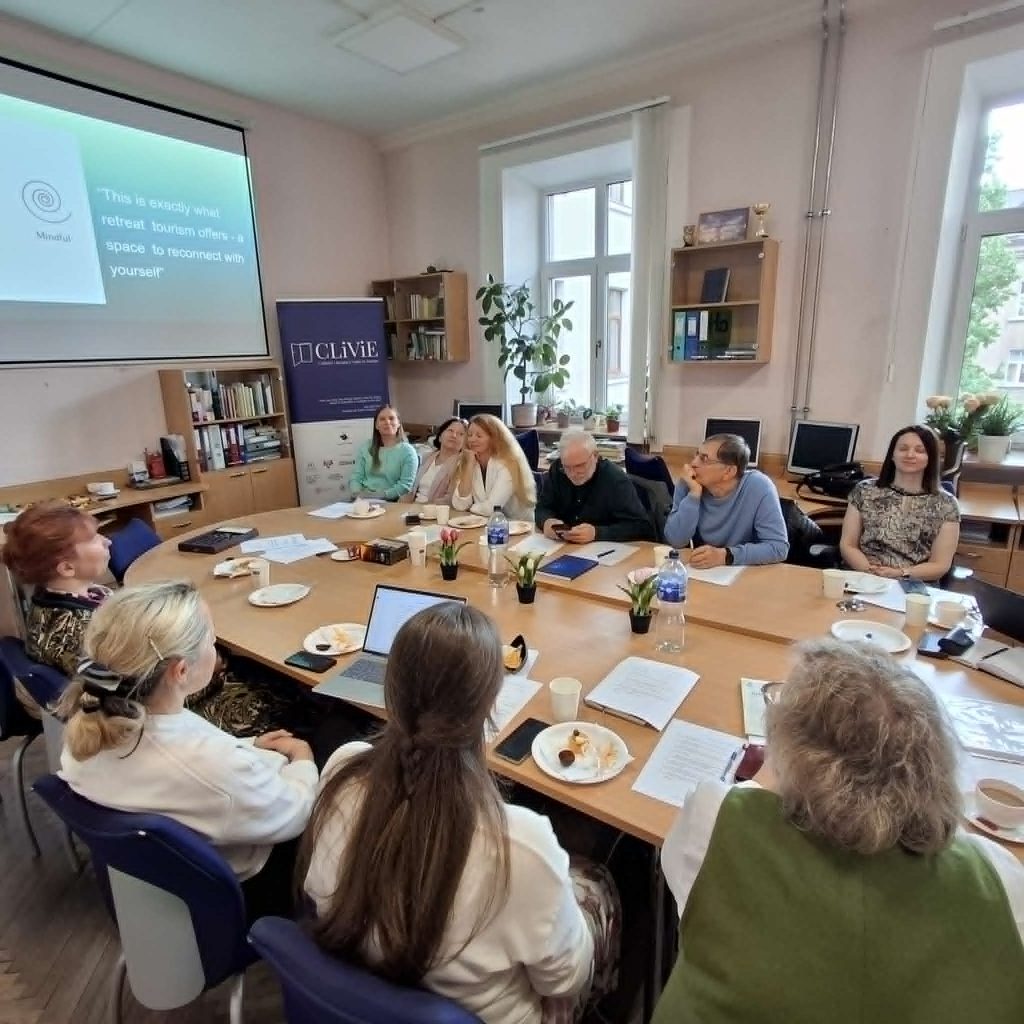
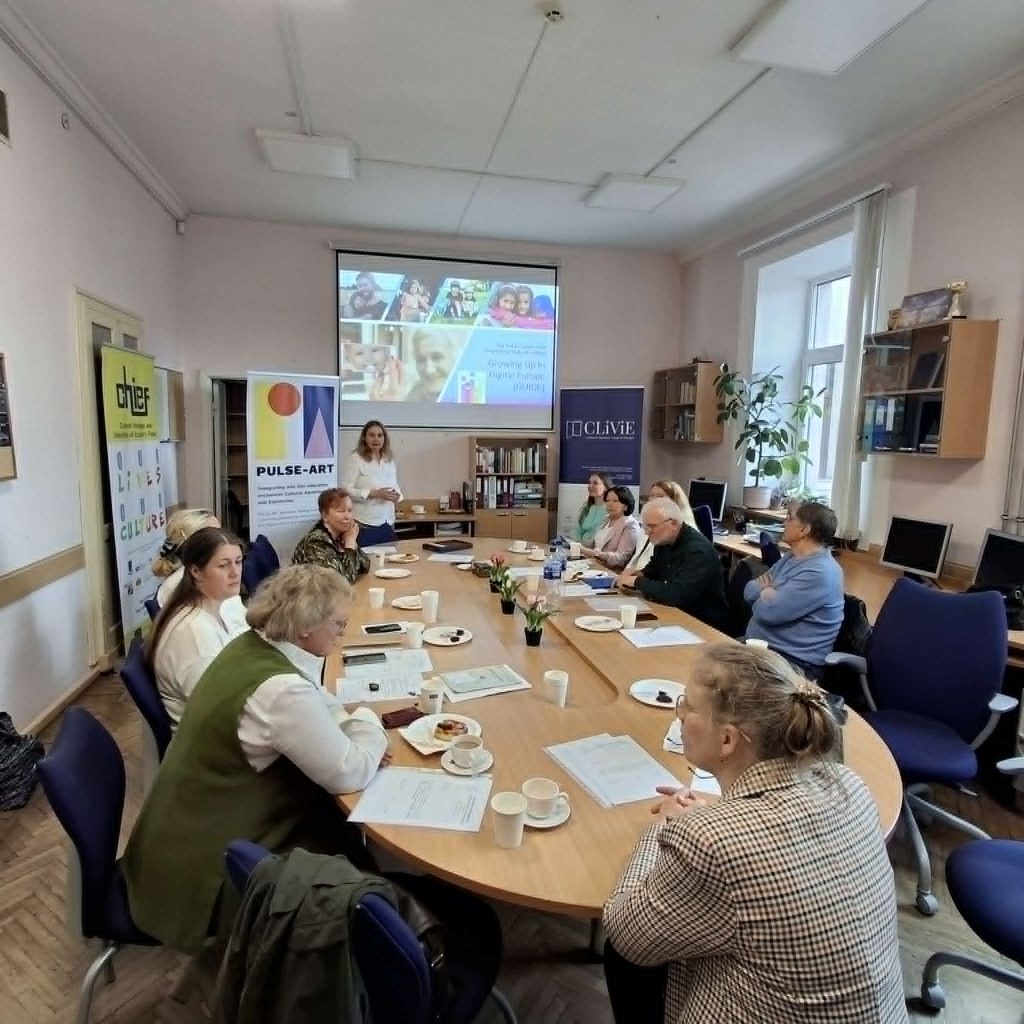
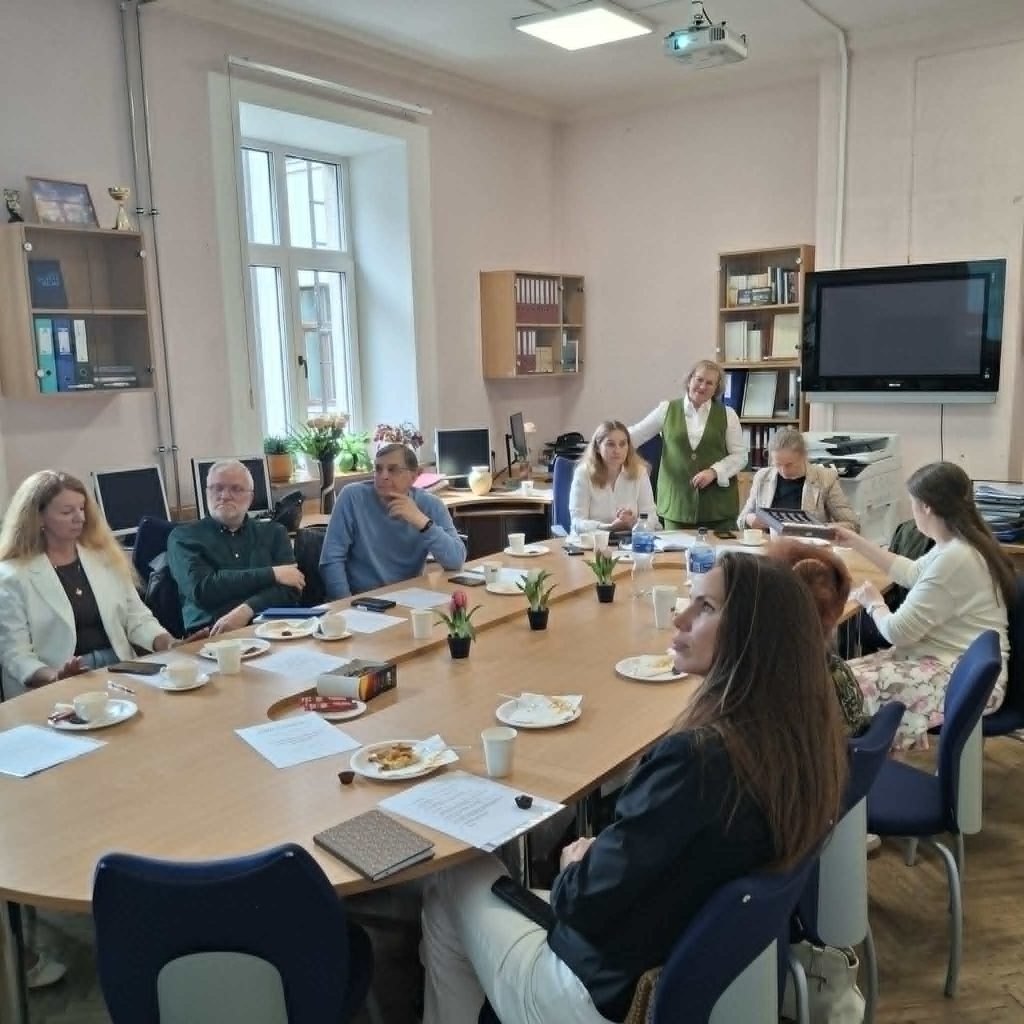
On May 25, 2026, the 11th scientific seminar “Latgale’s Past, Present, Future: Experience and Perspectives of Interdisciplinarity” was held, during which 8 papers were presented.
The seminar was opened by the Acting Director of the Institute of Humanities and Social Sciences, Professor Anita Stašulāne, who presented an analysis of the results of the scientific performance evaluation in the humanities and social sciences. Drawing on the reports of international experts, participants reviewed the identified strengths and weaknesses of the research activities and discussed possible solutions to address areas requiring improvement.
Researcher Ingrīda Kleinhofa presented the study “Literary Studies between the West and the Global South: Perspectives of the 21st Century”. In the increasingly interconnected world of the 21st century, literature transforms from a set of nationally bounded traditions to a structurally hybrid system of overlapping and interacting heterogeneous cultural codes. Literary production and reception occur within translocal and transcultural configurations, in which authors and readers no longer operate within a specific, unified cultural semiotic system. Hybridity thus becomes a constitutive feature of literary semiosis, and literary form emerges not as a stable container of cultural meaning but as the result of continuous interaction between codes. Within this framework, the traditionally established distinction between “Western” and “Global South” literary spaces becomes destabilized and subject to renegotiation. Textual circulation and intertextual reference operate through multi-directional, networked formations in which meaning emerges from the interaction of heterogeneous semiotic structures, with the formerly clear distinction between Self and Other gradually blurring. Literary analysis in this context requires methodological approaches that are less grounded in specific cultural or ideological frameworks and more oriented toward structural analysis. One such approach is cultural semiotics, particularly within a combined theoretical framework drawing on U. Eco and Y. Lotman, within which cultural codes are identified and analyzed in their relational configurations. This perspective allows for a more structured and systematically describable account of literary hybridity.
Leading Researcher Eridiana Oļehnoviča shared valuable insights gained through the Interreg project “Green Stories in Latgale: Educating the Public on the Importance of Plants from an Interdisciplinary Perspective.” The researcher particularly highlighted the interdisciplinary experience gained by young people from Latvia and Lithuania at the international summer camp held in 2025, where they had the opportunity not only to significantly expand their knowledge of biodiversity and its conservation, but also to gain practical experience with various environmental research methods. The camp served as an excellent platform for participants to improve their communication and collaboration skills in an international and intercultural setting. In addition to the camp, this project has also successfully developed 10 new educational sessions specifically tailored to various target groups in society, thereby continuing to promote public awareness of the importance of nature and plants in the long term. About the project: The summer camp and the development of educational sessions were implemented with the support of the European Regional Development Fund under the “European Territorial Cooperation” (Interreg) objective. The activities took place within the framework of the approved cooperation program “(Interreg VI-A) Latvia-Lithuania” in Latvia and Lithuania, Project No. LL-00188 “Public Education and Raising Awareness of the Importance of Plants in Human Life” (Green Stories. Society education and raising public awareness on the importance of flora to humanity).
Marta Bižāne, a 1st-year student of the doctoral study program “Economics”, presented the research “Retreat Tourism as a Form of Alternative Tourism: A Conceptual Analysis”, which is part of her upcoming doctoral thesis (supervised by HSZI leading researcher Vera Komarova).
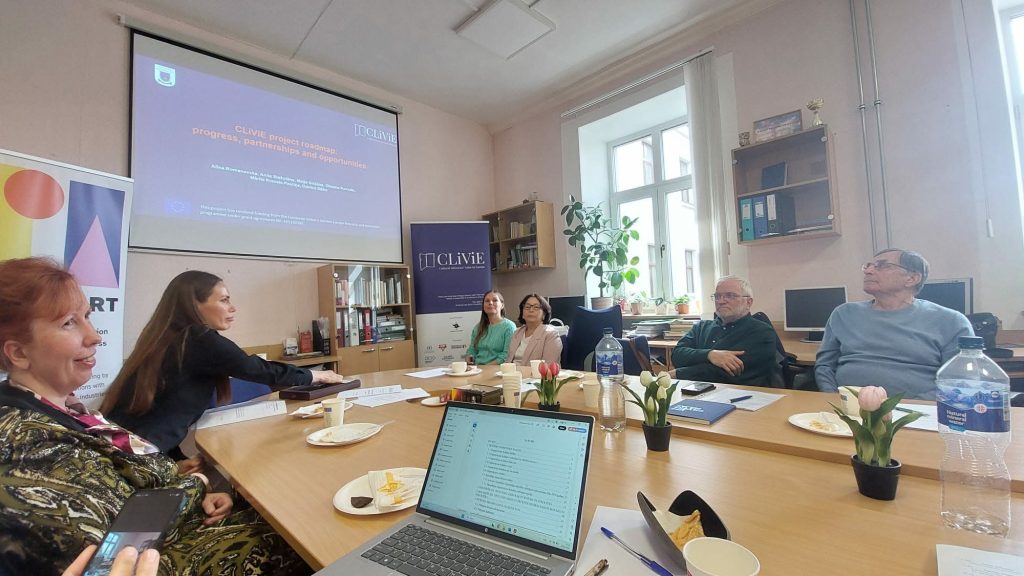
Associate Professor, Leading Reseacher Alīna Romanovska presented the report “CLiViE Project Roadmap: Progress, Partnerships and Opportunities”, prepared together with co-authors Anita Stašulāne, Maija Grizāne, Oksana Kovzele, Mārīte Kravale-Pauliņa, and Dzintra Iliško, highlighting the research results of the Horizon Europe project Cultural Literacies’ Value in Europe (CLiViE). Particular attention was devoted to the case study “The Other in Art and Life”, which, in cooperation with the Daugavpils Mark Rothko Museum, explored how arts-based non-formal education contributes to young people’s intercultural understanding, social cohesion, and their ability to engage with and accept diversity. The study included creative workshops, discussions, and an exhibition of young participants’ artworks. The findings demonstrated that participation in cultural activities improves young people’s emotional well-being, increases engagement in cultural life, and strengthens collaboration skills. The CLiViE project brings together 13 partner organisations across Europe and investigates the role of cultural literacy in fostering resilient and socially cohesive societies. The project is funded by the European Union’s Horizon Europe Research and Innovation Programme under Grant Agreement No. 101132285.
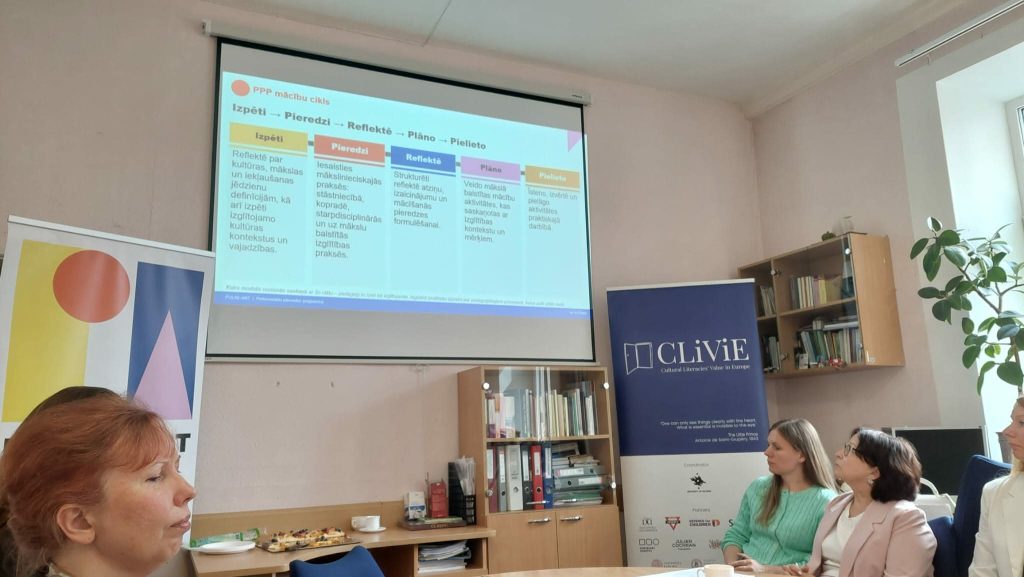
Leading Researcher Oksana Kovzele introduced the seminar participants to the PULSE-ART project Professional Development Programme (PPP) for promoting cultural awareness and expression (CAE) (co-authors of the report – Ilze Kačāne and Anita Stašulāne). The goal of the PPP is to provide the necessary set of knowledge, skills and attitudes that allow art to be included in the educational space and meaningfully promote CAE. The program is oriented towards a wide audience (pedagogues, youth work specialists, lifelong learning implementers, cultural process promoters, etc.), it can be implemented both linearly (6 modules) and selectively (by choosing one or two of the modules). The PULSE-ART project is implemented by 10 partner institutions. The project is implemented within the framework of the European Union’s Horizon Europe Research and Innovation Programme under Grant Agreement No. 101178988.
Researchers of the State Research Programme “Navigating the Latvian History of the 20th–21st Century: Social Morphogenesis, Legacy and Challenges” (No. VPP-IZM-Vēsture-2023/1-0003) Irēna Saleniece, Maija Grizāne, Laima Grišule, Haralds Bruņinieks presented the paper “The 20th Century Past of Latgale and Selija in the Interdisciplinary Scope: Research Experience of the Oral History Centre”.
Professor and Leading Resarcher Anita Stašulāne and co-author Associate Professor and Leading Resarcher Alīna Romanovska introduced participants to the process of developing the scientific infrastructure of the GUIDE study. To support the implementation of GUIDE (Growing Up in Digital Europe: EuroCohort), the first comparative cohort study in Europe examining the well-being of children and young people from birth to 24 years of age, the consortium is developing a methodological guide entitled GUIDE-Book. Unlike existing longitudinal study guides, which primarily focus on data analysis, the GUIDE-Book will address a broader range of topics, including sample selection, survey design, fieldwork organization, and financial planning. The guide will present the methodology used in previous large-scale longitudinal studies and provide an overview of the current social and political context shaping the well-being of children and young people across Europe. This activity was implemented within the framework of ERDF project No. 1.1.1.5/3/24/I/003 “Support for the participation of Daugavpils University in the Horizon Europe programme”.
Additional information:
Acting Director of HSZI, Professor Anita Stašulāne
e-mail: anita.stasulane@du.lv