.svg)


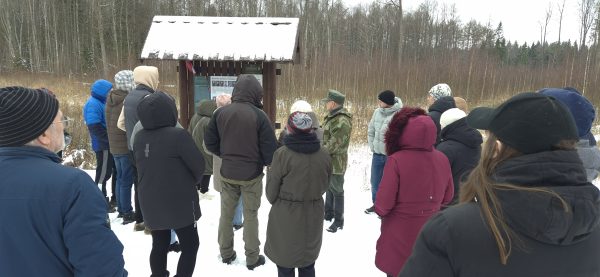
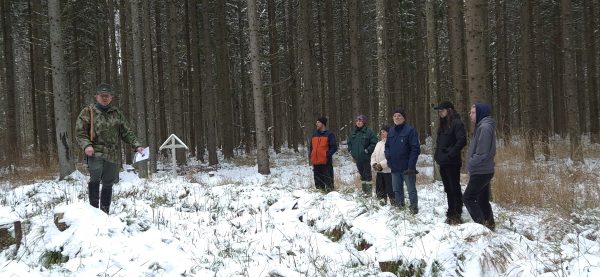
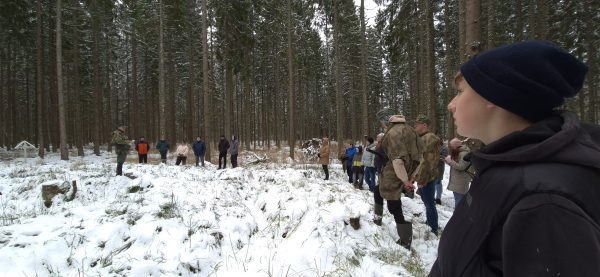
On November 29th, with the financial support of the State Culture Capital Foundation Culture program of Selija, the Rainis Museum “Tadenava” held an excursion tour “Along the trail of national partisans in Selija.” The tour was led by historian PhD cand. Haralds Bruņinieks, who has devoted many years to academic exploration of the history of the national resistance movement in central Selija.
Haralds Bruņinieks has also managed to reveal unique testimonies, which are important not only for Latvia, but for the whole of the Baltic. One is the hiding place of the national partisan Alfreds Blumbergs in the attic of the house, which was also an opportunity for participants to visit.
The former Suseja parish house, which at that time functioned as the local committee of the Soviet occupation authorities, suffered an attack by the Selija national partisans on July 7, 1945. The attack was part of a wider national partisan campaign and took place simultaneously with the attacks on the Vilkupe butter factory and the house of the destroyer Kaunackas.
According to the instructions of the commander of the Suseja national partisan group, Albert Kaminskis (1920–1946), the partisans were to destroy the security of the local executive committee, take weapons, military uniforms, documents and damage telephone communications. About 17 national partisans under the leadership of the Lithuanian partisan commander Jozas Kuveikis participated in the attack on the Suseja committe hause.
One of the stops was also a memorial site of the battle on February 13, 1945, in the Dimanti forest in Kalna parish.
The most interesting site was the Indans-Gravelsons settlement, with such a serious protection system, no longer existed anywhere else in Latvia. The Indans-Gravelsons group bunker in forest during the winter period of 1949—1950 is characterized by a then unique defense stronghold. With defensive holes and weapon nests established in the perimeter.
There is still considerable scope for research in this area, as both thematic and regional research is needed to better understand the events of the national partisan war, but everyone can start by exploring their family.
In this guided tour participated students of the bachelor and master study programme “History”, doctoral study programme “History and Archaeology”.
Additional information:
Agnese Timofejeva
DU PhD student of “History and archaeology”